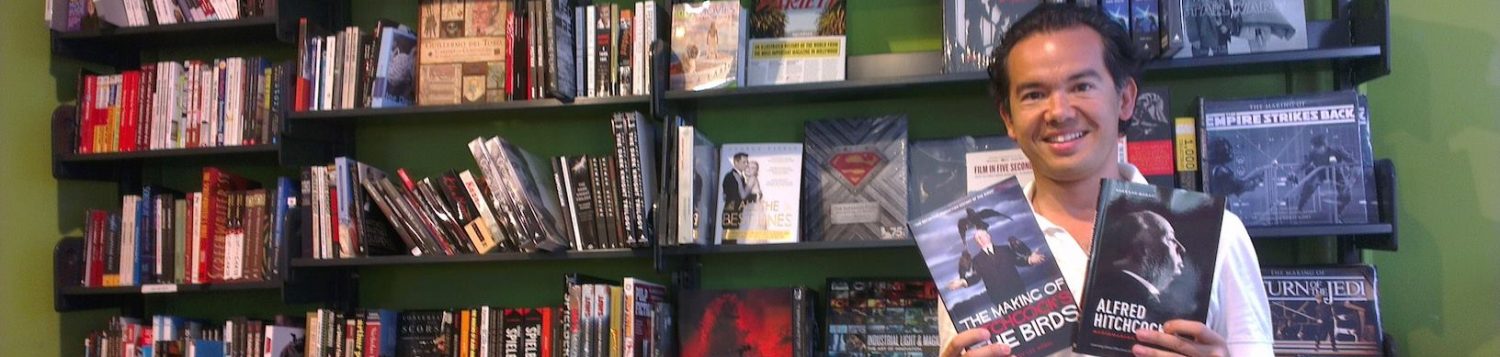
By Tony Lee Moral
I’ve spent the last twenty-five years living with Alfred Hitchcock.
That may sound like an exaggeration, but when you’ve written five books on a single filmmaker, interviewed dozens of his closest collaborators, and immersed yourself in unpublished archives and transcripts, that person becomes a constant companion. Hitchcock has been with me through hundreds of hours of interviews, across continents, and through stories that never made it into the press ,stories that reveal a very different man from the one many people think they know.
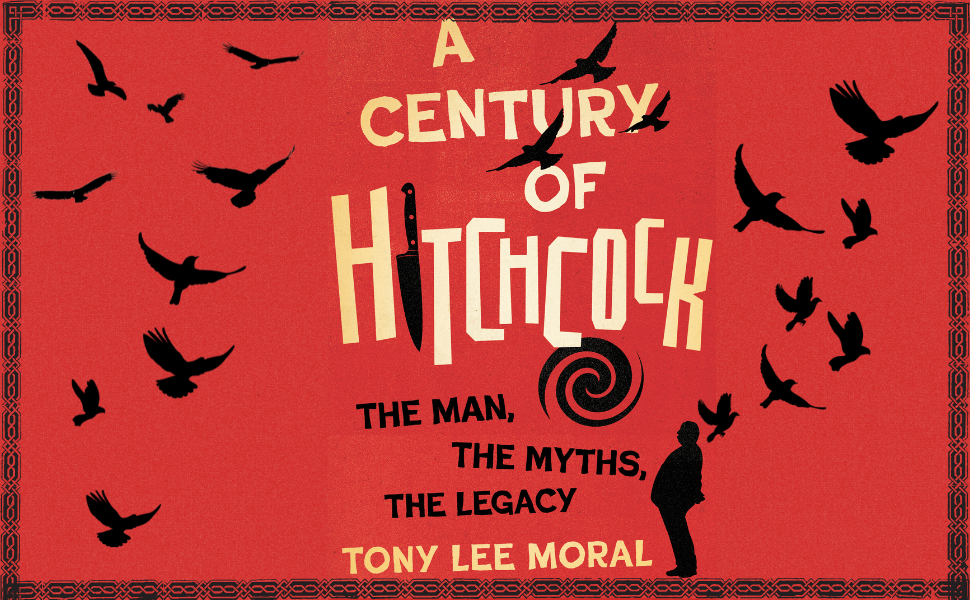
It’s those stories that sit at the heart of my new book A Century of Hitchcock, published this spring and timed to mark one hundred years since the release of Hitchcock’s first film, “The Pleasure Garden”. The centenary feels like the right moment not to “rehabilitate” Hitchcock ,his films hardly need rescuing ,but to challenge a narrative that has hardened into accepted truth.
The Hitchcock I Was Told About
Over the years, I’ve interviewed people who worked with Hitchcock day in, day out: Virginia Darcy, his hairdresser on multiple films; Rita Riggs, the wardrobe mistress; Jim Brown, his assistant director; Hilton Green, his producer. These weren’t casual acquaintances or star-struck admirers ,they were professionals whose livelihoods depended on long hours, difficult shoots, and sustained collaboration.
What they described to me was not a monster, tyrant, or sadist. They described a director who was meticulous, deeply prepared, and ,crucially ,supportive. Hitchcock storyboarded everything. He knew exactly what he wanted before he arrived on set. He worked, famously, nine to five. In Hollywood, that alone made him something of an anomaly.
Because he was so prepared, the so-called “Hitchcock crew” enjoyed working with him. There was clarity, security, and an absence of chaos. These accounts are strikingly consistent, and yet they sit uncomfortably alongside a darker portrait that has dominated public discourse for decades.
Where the Dark Myth Came From
That darker portrait owes much to one figure – Donald Spoto.
In 1983, three years after Hitchcock’s death, Spoto published The Dark Side of Genius. By then, Hitchcock could no longer answer back. The book painted a picture of a cruel, vindictive man, prone to elaborate practical jokes and psychological abuse ,particularly during the making of The Birds and Marnie. What fascinated me, and troubled me, was how little scrutiny these claims received once they entered the bloodstream of popular culture. Over time, repetition became proof.
While researching A Century of Hitchcock, I uncovered a key transcript that makes something unmistakably clear: Spoto harboured a personal grievance against Hitchcock that pre-dated The Dark Side of Genius. In the 1970s, Hitchcock had given his cooperation instead to another biographer, John Russell Taylor, whose official biography appeared in 1978. Spoto desperately wanted Hitchcock’s confidence ,and didn’t get it. That rejection mattered.
In the transcript, Spoto admits he was looking for a father figure. He believed he would find one in Hitchcock. When he didn’t, admiration curdled into resentment. Read in that light, The Dark Side of Genius becomes something else entirely: not neutral biography, but a deeply personal reckoning.
How Myths Become “Facts”
Take one of the most famous stories: Hitchcock allegedly slipping a laxative to a prop man and handcuffing him to a radiator as a joke. It’s been retold endlessly. Yet when I tracked down first-hand accounts through the British Entertainment History Project, the story changed. A cameraman who was there described the incident as wildly exaggerated ,transformed from a harmless prank into something sinister through repetition and embellishment.
This pattern repeats. Stories grow darker with each retelling. Nuance disappears. Motive is assumed. The same is true of the allegations surrounding The Birds and Marnie. I’ve interviewed crew members who were present, and their recollections differ markedly from Spoto’s interpretations. Context matters. So does proximity. And so does motive.
In 2013, Spoto’s version of events reached a mass audience through “The Girl” which dramatised his claims for television. By then, the “dark Hitchcock” had become a marketable brand.
Why Speak Now?
When Spoto was alive, he was famously litigious. Those who challenged his narrative risked legal threats. That atmosphere had a chilling effect. Now that he has passed away, previously suppressed material can finally be discussed openly.
This is not about attacking a dead man in the same way he attacked Hitchcock. It’s about acknowledging how personal grievance, when filtered through authority and repetition, can become public narrative. It’s also about fairness, to Hitchcock, to his collaborators, and to history itself.
The Hitchcock family have always known the truth. Like a royal household, they chose discretion over public dispute. As they’ve said to me, people will always write stories ,but they know who Alfred Hitchcock really was. The public, however, deserves the same clarity.
Why This Matters, Especially Now
Hitchcock remains one of the most influential storytellers in cinema. His fingerprints are all over the work of Christopher Nolan to Park Chan Wook. He still tops polls. His films are endlessly rewatched, analysed, and imitated. And yet, there remains a stain on his reputation that rests on surprisingly fragile foundations.
As I prepare to speak at the Alfred Hitchcock Festival in Scotts Valley ,a place of deep personal significance to Hitchcock, where he returned whenever he could ,I’ll touch on some of this research. Gently. Respectfully. It’s a sensitive subject, especially for the family. But audiences ask. They want to know. The rumour mill is powerful, and the press has a responsibility not just to repeat stories, but to investigate them fully.
What I’ve found is, frankly, more compelling than the myth. It’s a human story, about rejection, projection, and the way narratives form. It’s also, fittingly, a story Hitchcock himself might have appreciated. A tale of obsession. Of misplaced loyalty. Of revenge. Even Hitchcock’s beloved dogs, his Sealyhams and West Highland terriers, play an unexpected role. I’ll save that part for the book.
After twenty-five years, hundreds of interviews, and a lifetime of looking behind the camera, I believe the tide is finally turning. A Century of Hitchcock doesn’t tear down a legend. It restores proportion. And I hope, with the help of readers, critics, and festival audiences, it will allow us to see Alfred Hitchcock not as a caricature ,but as the meticulous, supportive, endlessly imaginative filmmaker his collaborators always knew.
#alfredhitchcock #scottsvalley #hitchcock #alfredhitchcockfestival #acenturyofhitchcock #moviemyths #universitypressofkentucky
 tonyleemoralbooks.com