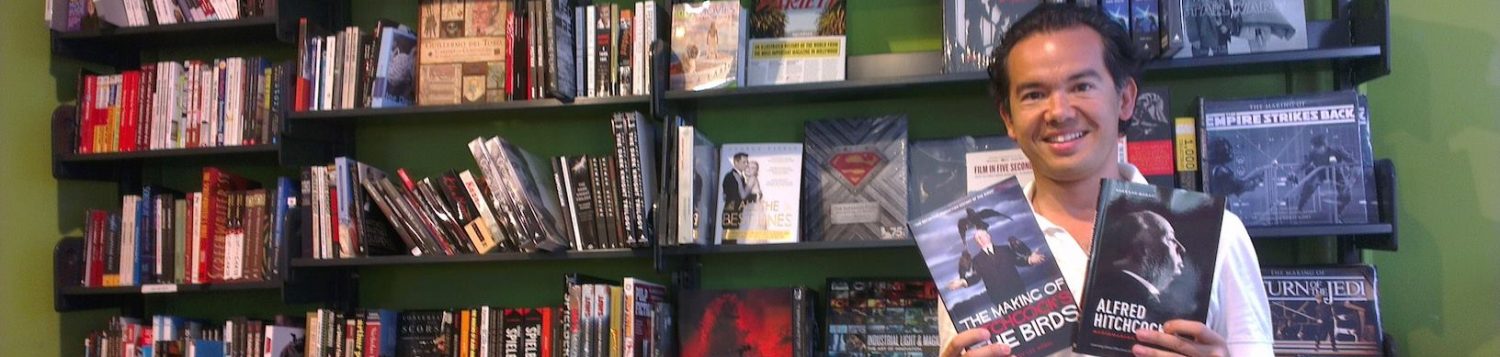
When I began researching A Century of Hitchcock: The Man, the Myths, the Legacy almost thirty years ago, I hoped it would encourage readers to look again at Alfred Hitchcock’s remarkable life and work through the lens of primary archival research. I could never have anticipated the extraordinary level of press attention the book has received since publication by the University Press of Kentucky. It has been immensely gratifying to see the research spark thoughtful discussion across newspapers, magazines, radio, podcasts and online publications throughout the United States, Europe and beyond.
The campaign began before publication with a major feature in The Guardian, which explored the book’s central argument that personal grievances and repeated retellings have played a significant role in shaping Hitchcock’s modern reputation. This was followed by exclusive extracts in IndieWire, Entertainment Weekly and SYFY Wire, each examining newly uncovered material relating to The Birds and Marnie, while regional newspapers such as The Press Democrat highlighted previously overlooked aspects of Hitchcock’s Northern California productions. It was particularly pleasing to see the Boston Globe include the book in its prestigious summer reading recommendations alongside many of the season’s most anticipated titles.
Following publication, reviews appeared across a wide range of respected film and literary outlets, including Library Journal, Publishers Weekly, Film Obsessive, Entertainment Focus, Cinema Sentries, SF Crows Nest, Movie Reviews from the Dark, Shepherd Express and The Film Stage. Some reviewers strongly embraced the book’s reassessment of Hitchcock’s reputation, while others challenged aspects of its conclusions, but almost all recognised the depth of archival research underpinning the work. As an historian, I have always believed that serious scholarship should encourage debate rather than seek to close it down, and it has been rewarding to see the evidence discussed so widely.
Perhaps the most significant coverage came at the end of June when veteran film critic Mick LaSalle devoted a substantial feature in the San Francisco Chronicle to the book, writing that it casts doubt on decades of accepted narratives surrounding Alfred Hitchcock. Even more encouraging was seeing the article republished in the Austin American-Statesman and the San Antonio Express-News, allowing the discussion to reach entirely new audiences across Texas. Alongside newspaper coverage, I have also been delighted to discuss the research in depth on Front Row Classics for NPR Illinois, Texas Public Radio, and a growing number of podcasts dedicated to film history.
The conversation has not been confined to the United States. Newspapers and publications in Australia, the Netherlands, Sweden, Germany, Poland and Israel have all engaged with different aspects of the book, while my recent article for the Catholic Herald exploring Hitchcock’s lifelong Catholic faith has opened another fascinating avenue of discussion about the director’s personal beliefs and how they have been represented by previous biographers. Watching these conversations develop internationally has been one of the most rewarding aspects of the book’s publication.
Most gratifying of all has been seeing readers themselves engage with the evidence. Discussions across social media, film forums, Amazon reviews and reader communities demonstrate that there remains a genuine appetite for thoughtful historical reappraisal. Whether readers ultimately agree or disagree with my conclusions matters less than the fact that the conversation has returned to original documents, eyewitness testimony and archival research rather than relying solely on long-established assumptions.
I am enormously grateful to every journalist, editor, broadcaster, reviewer and reader who has taken the time to engage with A Century of Hitchcock. Researching and writing this book has been one of the most challenging and rewarding projects of my career, and to see it generate such widespread international discussion has been very rewarding. I look forward to continuing the conversation as Hitchcock’s remarkable legacy continues to be reassessed by a new generation of readers and film lovers.

